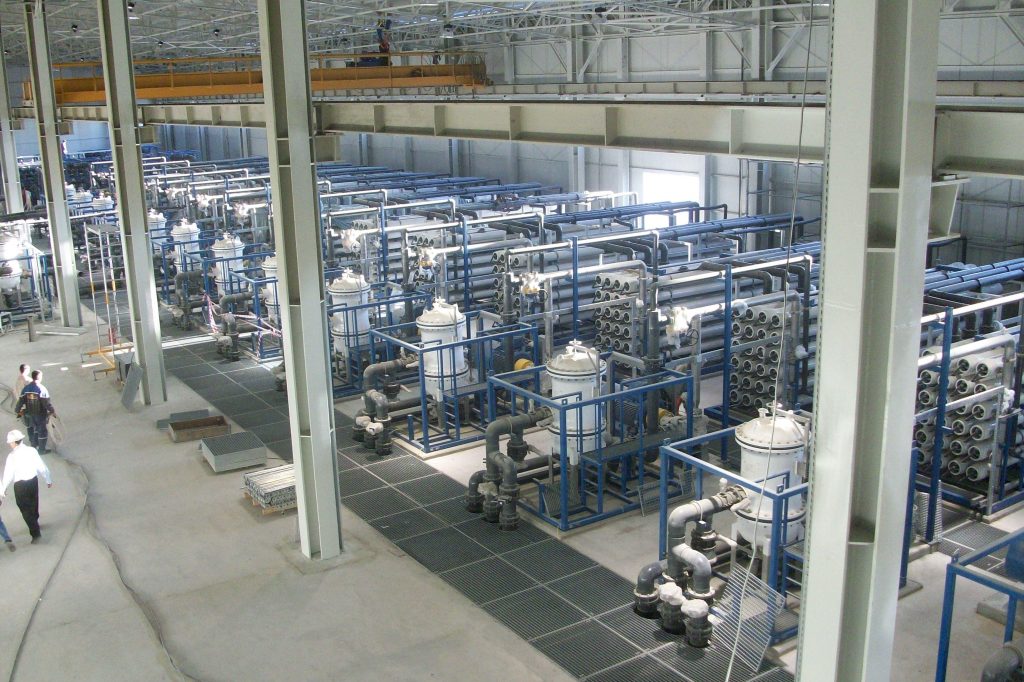
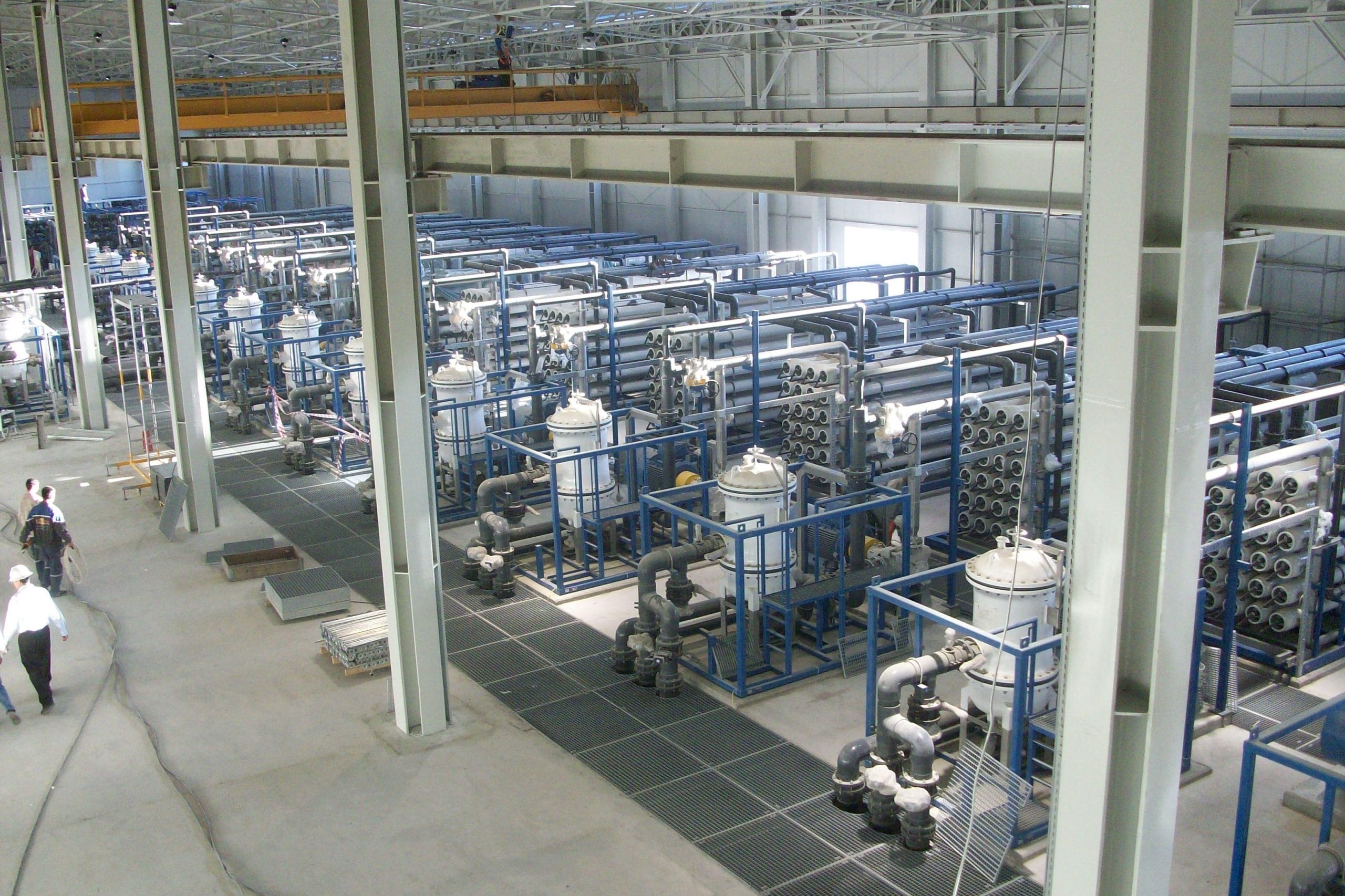
For domestic and industrial water uses according to water quality;
- City Drinking Water Treatment Plants
- Packaged Drinking Water Treatment Plants
- Industrial Water Treatment Plants
- Sea Water Treatment Plants are designed
The Water Treatment Plants process is prepared by expert engineers considering the characteristics of the water source and the required water quality.
As Felimare Engineering and Foreign Trade Company, we continue to work and offer new solutions for many different cities and countries.
APPLIED SOLUTIONS
Coagulation-Flocculation-Sedimentation
- Compact or separate systems
- Circular, rectangular or lamellar settling units
- Chemical dosing units
Filtration
- Open slow sand filters
- Open rapid sand filters
- Vertical and horizontal pressure sand filters
- Upflow self-cleaning filters
- Ultrafiltration, membrane filters
- Disc filters
- Cartridge filters
Disinfection
- Chlorination
- Ozonation
- Ultraviolet Systems
Reduction of Ion Charge with Reverse Osmosis
This treatment, which is based on a filtration system, is applied to waters (sea water, well water, etc.) where conventional treatment systems are insufficient. It separates all the unwanted minerals in the water from the water and provides pure water. Water moves from a less concentrated environment to a very dense environment until it reaches osmotic balance, this is a process that occurs naturally. Reverse osmosis makes this equation work in the opposite direction with pressure.
Water Softening with Lime-Soda Method
The hardness of a water is defined as the soap precipitating property of that water. Ca+2 in soap water and precipitates due to the presence of Mg+2 ions. Ions such as Fe+2, Zn+2, Al+2 also contribute to this precipitation. they help. However, high amounts of Ca+2 and Mg+2 ions are usually present in water. The presence of water causes hardness. This is the most common hardness type in natural waters. Hardness removal (chemical softening), the hardness of water by adding various chemicals. It is a process for the removal of all or part of it. of the waters The processes used for softening are chemical precipitation and ion exchange methods. Chemical precipitation processes can be carried out in 3 ways.
1-Lime-soda process
2-Caustic-soda process
3-Sodium phosphate process
Water Softening with Ion Exchange Method
These solids, which have no degree of solubility, carry exchangeable cations and anions. There are three main groups of ion exchange resins: Cationic Resins: These are cation exchangers whose functional groups can react with cations of aqueous media. Anionic Resins : Anion exchangers whose functional groups can react with anions of aqueous media MixBed Resins: Some materials have the ability to exchange both anion and cations and are called amphoteric ion exchangers. Resins used in water softening are included in the group of cationic resins.
Electrodeionization (EDI)
This system, which has a continuous structure, is a self-renewing water purification technique. In this way, high purity water is produced. EDI is a system created by combining two different ion removal technologies and the basic components of the system are listed below.
- Ion selective membranes
- ion exchange resins and
- Electrical current
Iron and Manganese Removal with Cascade Aerators
While providing dissolved oxygen with aeration, raw in the oxidation of iron, manganese and organic matter in water is consumed. Thus, iron, manganese and organic matter removal is ensured.
Activated Carbon Fılters to Reduce Organic Load
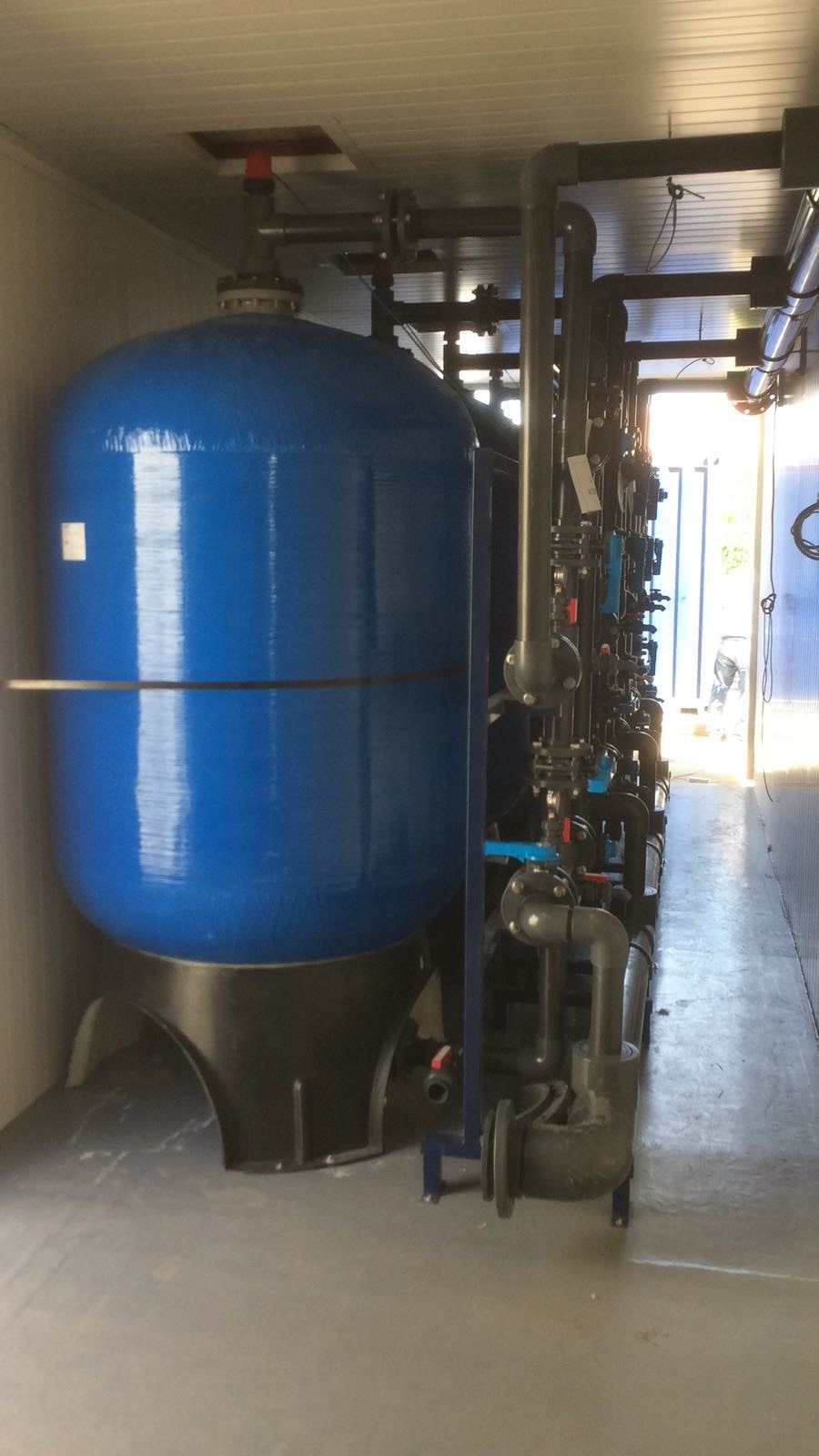
Carbon Filter Units are automatic backwash units used to remove unwanted organic substances (taste, odor and color) and chlorine from water, thanks to their large surface areas and high absorption capacities.